

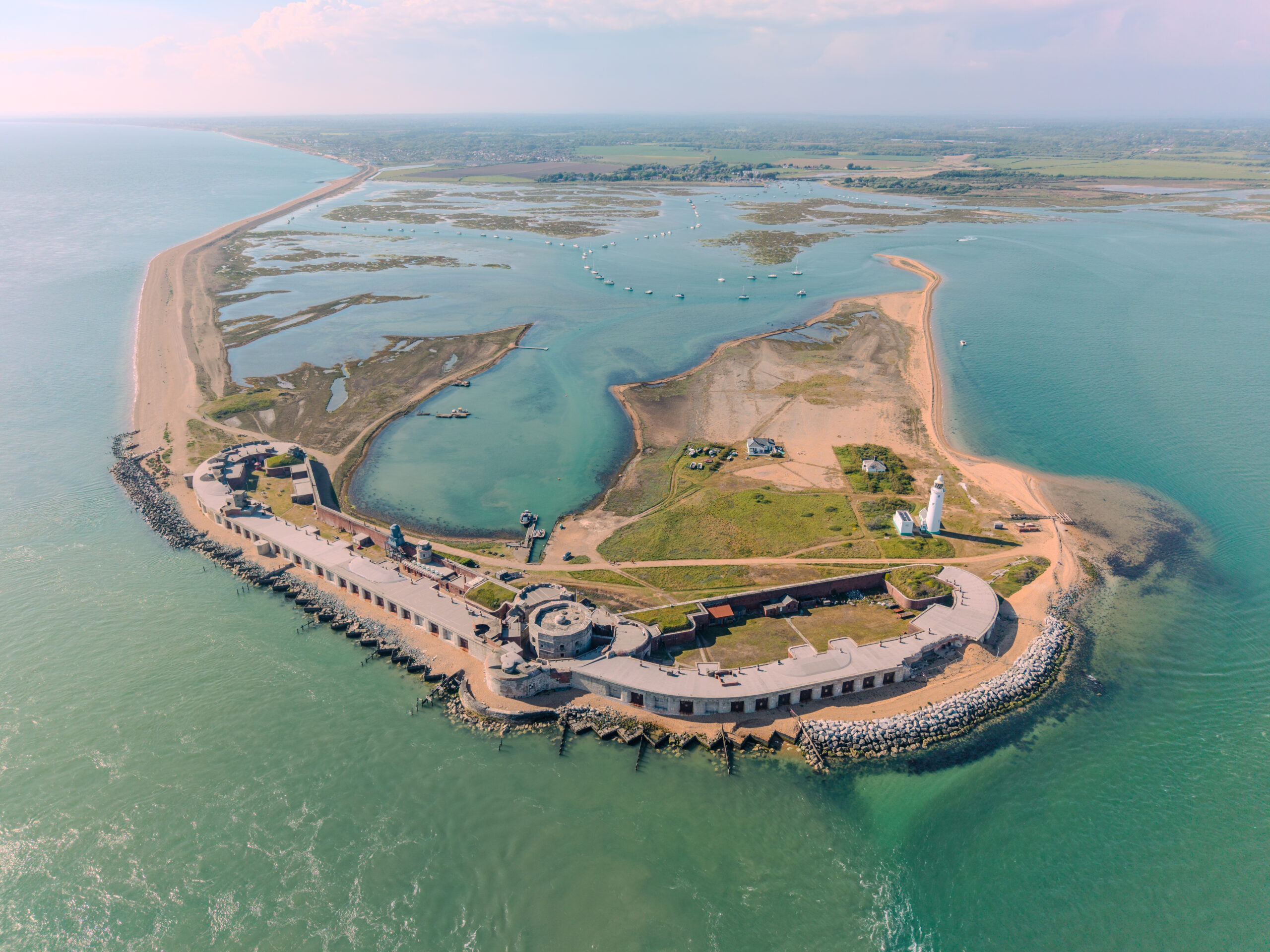
Since 1544, Hurst Castle has guarded the entrance to the Solent, its strategic location developed the castle into a powerful fortress. From its beginnings as one of King Henry VIII’s chain of artillery fortresses in 1544, Hurst Castle – unusually for a Tudor castle – remained in military use until 1956, playing an active role through both world wars.
Hurst Castle offers free entry for school trips, featuring downloadable teacher resources for self-led visits or popular guide-led tours. While ferry charges apply, all group members (including adults) pay a discounted child’s fee.
The castle provides a physical timeline to explore British history beyond 1066, tracing its evolution from its Tudor origins under Henry VIII. Students can stand where King Charles I was imprisoned in the keep in 1648 prior to his trial and execution, and explore the massive Victorian wing batteries added in the 1860s to house heavy rifled guns. It strongly supports curriculum chronology up to its final active role as a WWII coastal defence.
For geography, its location at the tip of a 1.5-mile shingle spit makes it an ideal fieldwork site to study longshore drift. Students can observe coastal transport and deposition firsthand, while evaluating real-world coastal management defenses, like rock armour and beach replenishment, used to protect the fortress.