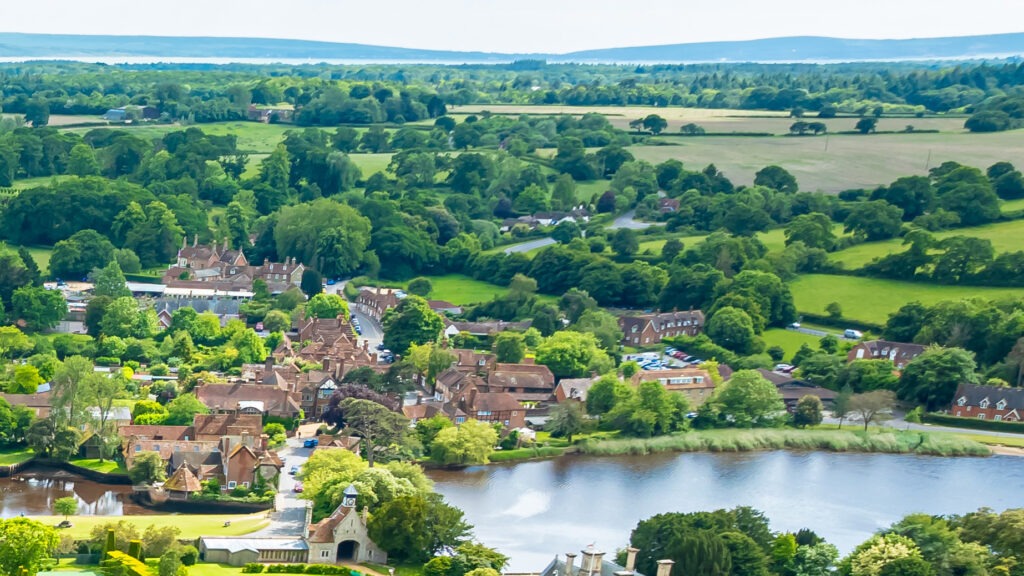
colourful beach huts, Calshot

Planning

The New Forest National Park was created on 1 March 2005 and took up its full planning functions  on 1 April 2006 – which means some changes to the planning rules affecting householders and businesses in the new National Park area.

The most important thing to establish is whether you are in the new National Park.  This map may help, but if you are still not sure, please contact us.

If you are outside the boundary of the New Forest National Park, these changes will not affect you and you should refer to the planning department of your local district council for further guidance.

Main changes to householders

If you were granted formal planning permission or started extension work prior to 1 March 2005 which did not need planning permission, then these changes do not apply to you.

You need to be particularly careful if you were previously given the advice that you did not need planning permission, as you may need planning permission now.  You should seek new advice if this is the case.

Here are the main changes to the rules (but they are not all of the criteria you need to consider):

  • In the past your could normally extend a home by 70 cubic metres or 15% of its volume without planning permission but this has been reduced to 50 cubic metres or 10% of its volume.
  • External cladding of a home will now always require planning permission.
  • Buildings in your garden, as well as enclosures such as swimming or other pools are now more likely to require planning permission if they are more than 10 cubic metres in size.  Previously if these buildings were more than five metres from your house they could be larger without necessarily requiring planning permission.
  • Any increase in the size or shape of a roof of a home will now always require planning permission.  This means that dormer windows will always need planning permission whereas previously under certain circumstances they did not.
  • You will now need planning permission if you put up a satellite dish on a chimney or on the wall or roof of your house which fronts onto the road.  It will also require planning permission if it is more than 15 metres above the ground.

Commercial developments

As well as the changes which apply to house alterations and extensions, there are a number of changes which affect the development of commercial premises.  Most businesses tend to take professional advice on planning matters but the main changes are summarised in a non-technical way below:

  • Agricultural and forestry developments – the general range of what can be built without planning permission remains the same with one main exception – ground works connected to fish farming.  But you now need to inform the Authority of all proposals to extend or alter existing building so a decision can be made on whether the Authority needs to formally approve details of the final appearance of the building.
  • Telecommunications development – most proposals by the main operators will now require planning permission, including masts, antennae and equipment housing larger than 2.5 cubic metres (unless they are temporary to cover an emergency).  People other than the main operators can install some minor equipment in the national park, without needed planning permission but always check before installing satellite dishes.
  • Schools, colleges, universities and hospitals – these can be extended within certain limits but there is now a requirement that any facing material must be similar to those used on existing buildings.

Background on planning

Town and Country Planning, now commonly referred to as Spatial Planning, is the legal and administrative system which aims to resolve and balance the conflicting demands for the use and development of land and buildings. The legal framework consists principally of the Town & Country Planning Act 1990 (most recently amended by the Planning & Compulsory Purchase Act 2004) and the Planning (Listed Buildings and Conservation Areas) Act 1990, together with a range of statutory regulations covering matters such as administrative processes, ‘permitted development rights’ and environmental impact assessment. Where the precise meaning, or application, of the statutes is questioned then the courts are often involved in interpreting the law, adding further to the legal background that has to be taken account of by all local planning authorities.

The government sets out national planning policies and guidance in a range of guidance notes or statements. National policies have to be taken account of by planning authorities where they are relevant to, for example, the formulation of policy or the determination of an application. All decisions in respect of planning applications are, by law, plan-led. That is they must be determined in accordance with the policies set out in the Development Plan, unless material considerations, such as national policy, indicate otherwise.

The National Park Authority is the sole local planning authority for the designated park area and therefore has to make decisions on all planning applications within its area (see section on Development Control). It also works closely with neighbouring authorities where there are ‘cross-boundary issues’ or where it objects to a development which is outside the National Park but is likely to have an adverse impact on the special qualities or enjoyment of the area.

special - protect