Tree graffiti
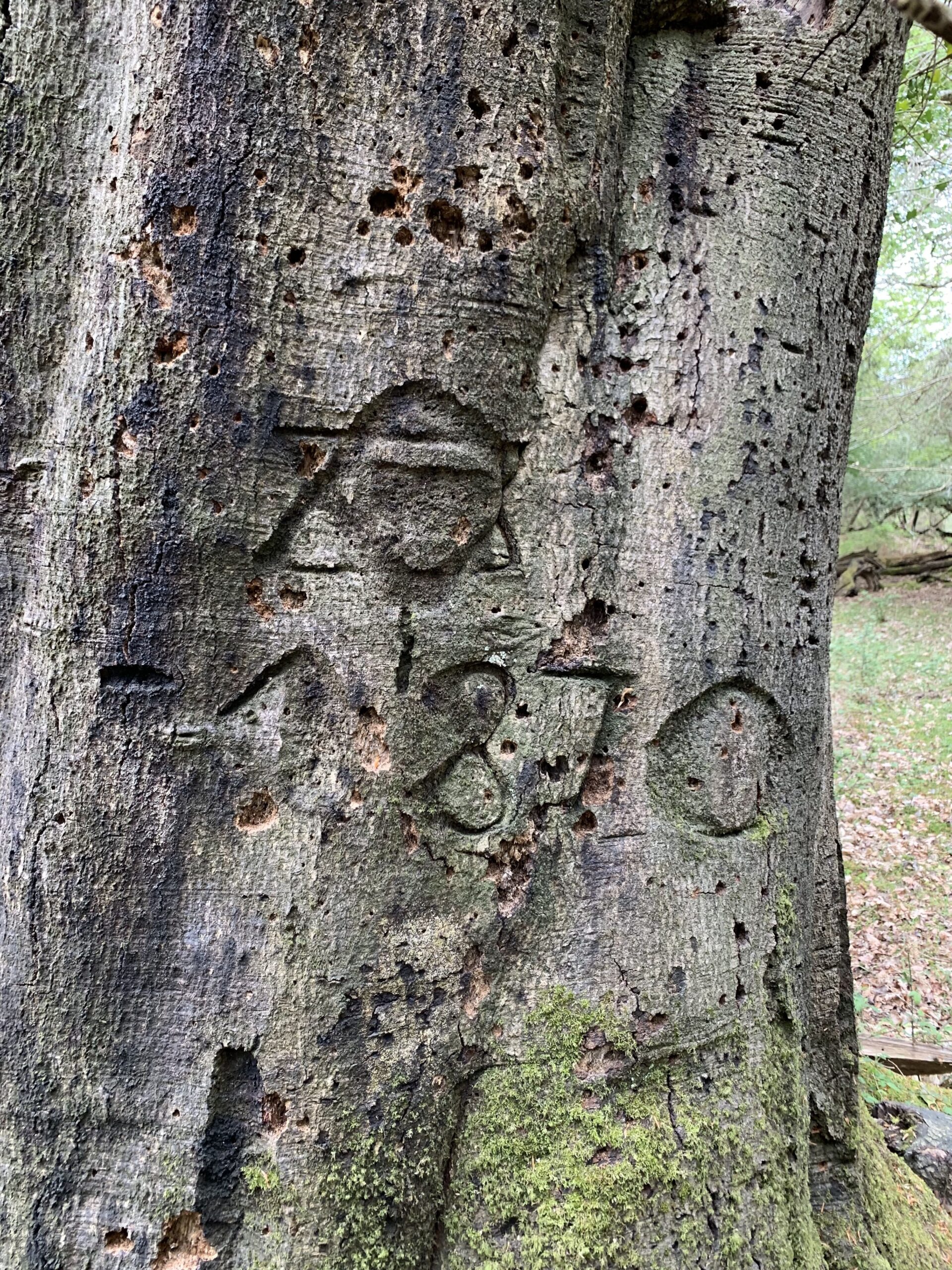
The New Forest has the densest population of ancient and veteran trees in Europe, so it’s little wonder some of them bear marks from many years ago.
While graffiti is seen as a modern blight on urban areas, in the depths of the Forest these ancient scribblings are a window into the past, revealing how some of our ancestors used the area.
Much like archaeological remains, tree graffiti (also known as an arborglyph) is under threat. Over time, the marks are warping or are being damaged by animals or humans. Trees blowing over or dying also threaten the longevity of these historic records.
Dates, pictures, poems and royal marks can all be found throughout the New Forest. These marks have been left by many different people, including foresters, Second World War soldiers, Kingsmen and even those wanting protection from witches.
Among the most common tree graffiti in the New Forest is the King’s Mark. This is shown as a broad arrow head, and was used to identify trees reserved for building Royal Navy ships. Once iron and steel were introduced to shipbuilding, the trees remained untouched, and still bear their royal mark to this day. Other graffiti to look out for are initials and names. Or if you’re very lucky you may find a picture carved into a tree. These vary from eagles to boats, houses and even people. Concentric circles, or ‘witch’s marks’, are thought to have been carved into trees to ward off evil spirits.
Tree graffiti citizen science results
Take a look at this map below to explore the fantastic historic tree graffiti submissions sent in by our citizen scientists.