

Tilefield
A project to restore historic landscape features, strengthen wildlife corridors, and enhance biodiversity at Tilefield, near Brockenhurst, has received almost £10,000 of support through the Farming in Protected Landscapes (FiPL) programme, operated locally by the New Forest National Park Authority (NPA).
Tilefield, home to Tilefield Equestrian and Tilefield Nature, has planted a native hedgerow over 400 metres long. This not only reinstates a lost boundary feature but also creates a continuous wildlife corridor, improving habitat connectivity between adjacent areas of landscape.
Six fenced willow plots have also been established at the edge of existing native woodland. Together, the hedgerow and willow planting form a connected corridor that strengthens woodland edge conditions and supports a wider range of wildlife.
Stock fencing has been installed along the hedgerow corridor with protective plant guards to prevent deer and small mammals grazing on them.
Over time, the hedgerow and willow plots will contribute to increased biodiversity, carbon storage, and climate resilience, providing food, shelter, and a natural highway for wildlife to move through while enhancing the character of this part of the New Forest landscape.
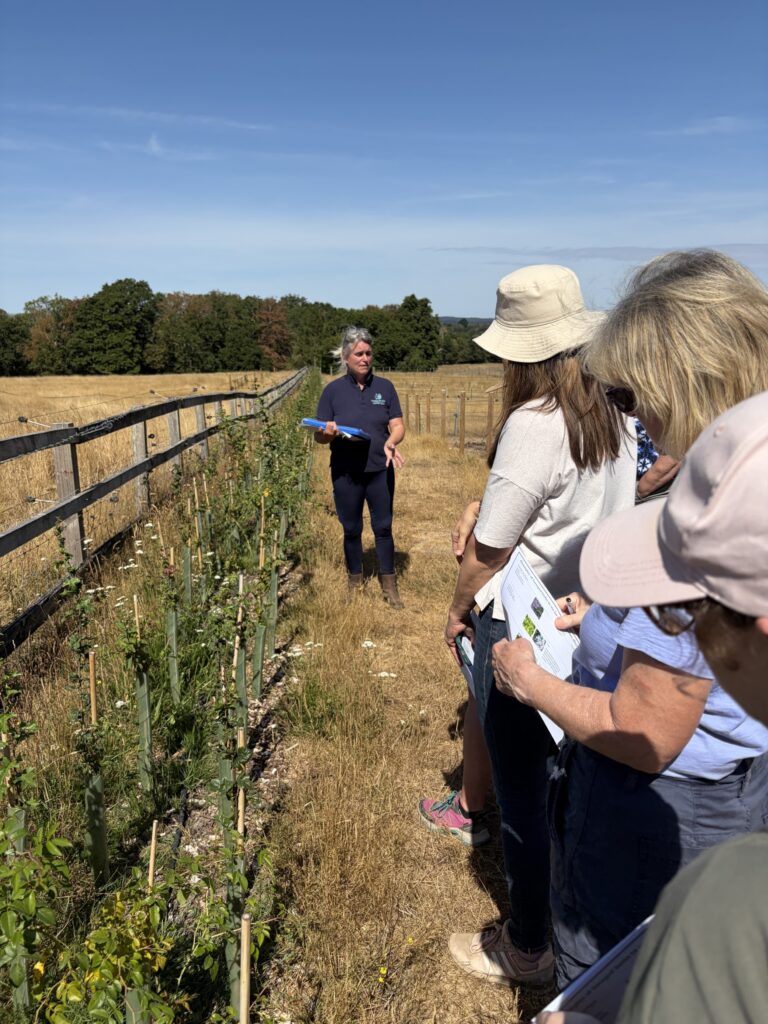
The hedgerow plants were supplied through the countryside charity (CPRE), which has worked closely with the NPA on the flagship Hampshire Hedge project to create around 14 miles (22km) of wildlife corridor connecting the New Forest and South Downs National Parks. CPRE was chosen as a partner for Tilefield to ensure an appropriate local species mix. The planting has been further supported by NPA volunteers who carried out work to check the health of the hedgerow.
The project is also supporting education and learning at the Tilefield site. The hedgerow and willow planting will be used to train small groups, giving children and young people who are unfamiliar with the countryside a better understanding of ecology, land management, and research.

Paul Walton, Head of Environment and Rural Economy for the New Forest National Park Authority, said: ‘This project at Tilefield shows how FiPL funding can help land managers restore historic landscape features while improving habitat connectivity and resilience. The new hedgerow and willow plots will strengthen wildlife corridors, support nature recovery, and create opportunities for people to learn about the importance of thoughtful land management in the New Forest.’
Amanda Barton, founder of Tilefield Equestrian and Tilefield Nature, said: ‘Tilefield is rooted in the New Forest, and our aim is to create spaces where people can connect with nature, learn, and take part in practical conservation. The support from FiPL has enabled us to restore important landscape features and build habitats that will benefit wildlife for years to come. It also helps us offer meaningful, hands-on learning experiences for our community.’
Tilefield brings together land management, conservation, equestrian activity, and community engagement, all set within the unique landscape of the New Forest.
The FiPL programme, delivered by the NPA and funded by the Department for Environment, Food and Rural Affairs (Defra), supports farmers, land managers, and Commoners to improve nature, climate resilience, heritage, and public access within protected landscapes. In the New Forest, FiPL has supported projects ranging from habitat restoration and species recovery to heritage conservation and sustainable land management.