[Joint press release]
- Countywide project to identify nesting sites and help reverse the decline of one of Britain’s most endangered birds backed by new New Forest Biodiversity Forum grant
Residents are being asked to look up and report house martins nesting under the eaves of homes and other buildings as part of a project to help protect the threatened birds.
The Hampshire House Martin Project is building a countywide picture of where the birds still breed, why they favour certain locations and what can be done to boost their nesting success. Led by Hampshire Ornithological Society and supported by grants from the New Forest Biodiversity Forum and the New Forest National Park Authority’s Sustainable Communities Fund, the project is encouraging people across Hampshire to map active nests through its website.
More than 500 nesting sites containing more than 2,000 nests were reported by around 400 people during 2025, far more than the project team expected. Reports received this year have already revealed previously unknown nesting locations.
Nigel Matthews, volunteer coordinator for the Hampshire House Martin Project said:
‘Every record helps us understand where house martins are holding on and the conditions they need to thrive.
‘We are particularly keen to hear about nests in locations that are not yet shown on our map. By looking up at the buildings in their neighbourhood, residents can contribute valuable evidence that will help us protect these much-loved summer visitors.’
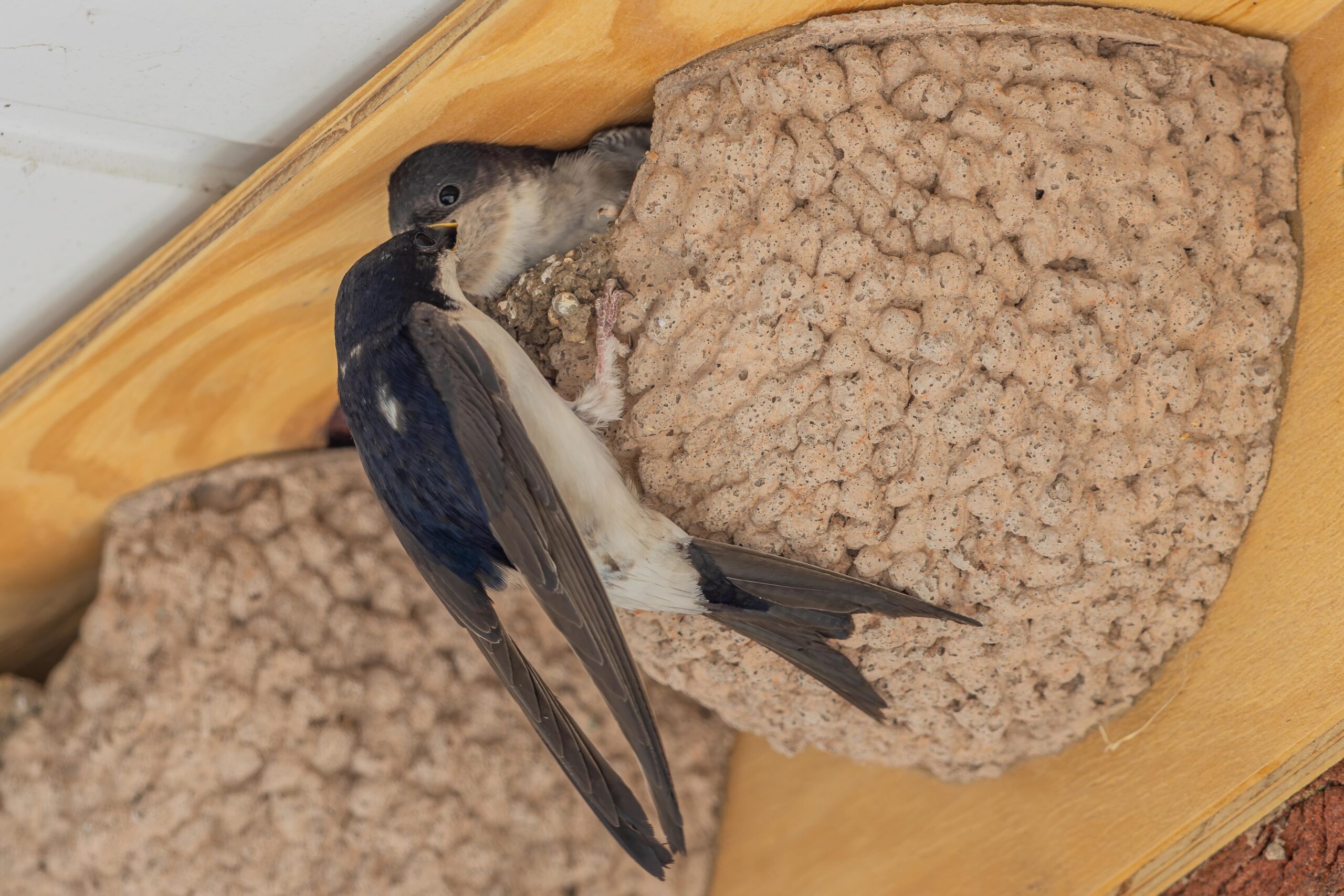
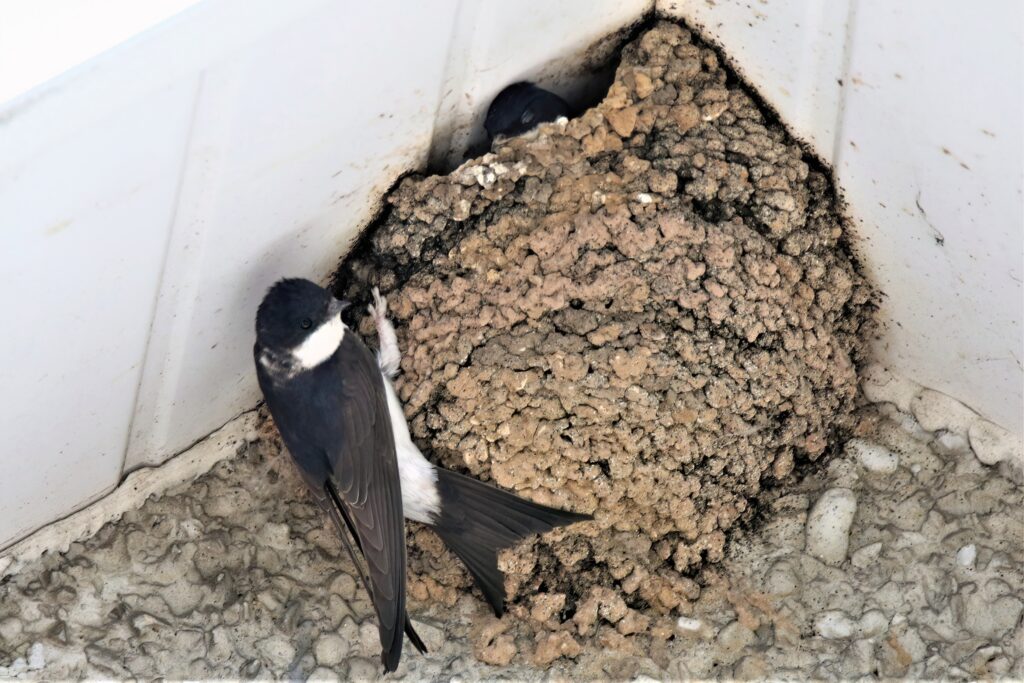
House martins arrive in the UK from Africa during April and May. They spend the summer catching flying insects and raising their young in distinctive cup-shaped mud nests, usually built beneath the roofs of houses and other buildings. Several pairs will often nest close together in a colony. However, house martins are becoming increasingly scarce, with a 40% reduction in the UK’s population, and have been added to the Red List of Britain’s most endangered birds.
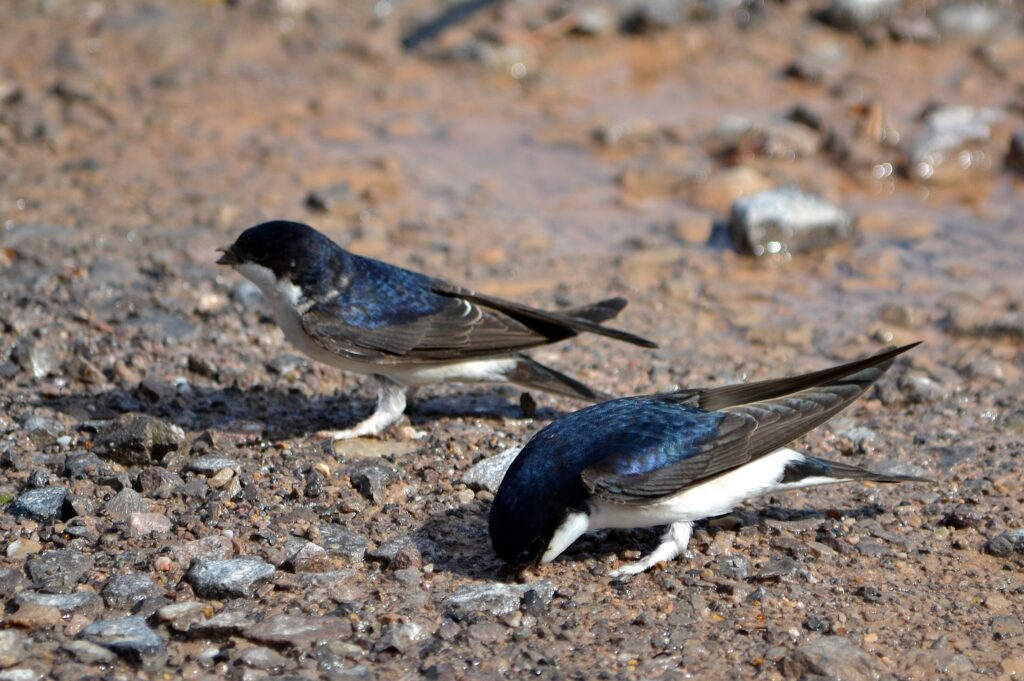
Possible causes include a decline in insect-rich habitats and difficulty finding the soft mud needed to build their nests, a direct result of a warming climate and prolonged dry weather. Modern plastic soffits and fascias on homes create an additional challenge because mud nests do not stick to them as securely and can fall, killing eggs or young.
Kate James, chair of Kairos Philanthropy which co-founded the New Forest Biodiversity Forum, said:
‘House martins make an extraordinary annual journey to breed in the UK, but their numbers are falling. Just as we are having to make adaptations to deal with climate change, our wildlife is faced with similar challenges.
‘Nature does not recognise boundaries and this project shows how all of us can give nature a helping hand through citizen science and practical solutions.’
Ahead of this year’s breeding season, the project installed 249 artificial nest cups across northern and eastern Hampshire. More than 25 have already been used by the birds, giving them safe and durable nests in which to raise their young. There are plans to install another 900 nest cups across Hampshire before next year’s season begins, focussed around the nesting locations mapped by the charity’s latest appeal.
The project has also received funding from South East Water, Birds on the Brink, Stannah Lift Group, Thames Water and Portsmouth Water.
House martins have blue-black upper parts with a pure white underside and a black short, forked tail. View the map and report a house martin nest by visiting: https://www.hampshirehousemartins.org.uk/report-a-nest-site?view=submission. Nests should be observed from a safe distance and nesting birds should not be disturbed.
ENDS
Notes to editors:
For further information contact Emma Mason on emma@emmamasonpr.co.uk 07762 117433
The Hampshire House Martin Project is led by Hampshire Ornithological Society to raise awareness of house martin declines, increase knowledge of nesting sites and population size, and provide artificial nest cups to improve breeding success.
The New Forest Biodiversity Forum is the leading independent voice on nature recovery in the region. Co-founded and powered by long-term funding from Kairos Philanthropy, the Forum works to provide independent evidence on the state of biodiversity in the New Forest and the surrounding area, and the action needed to protect it.
Its work includes:
- Commissioning the first comprehensive New Forest Biodiversity Assessment (due autumn 2026)
- Funding targeted surveys and research to fill critical biodiversity and conservation evidence gaps
- Supporting long-term monitoring, including breeding raptors
- Training and supporting citizen scientists through a Volunteer Ecological Surveyor Programme (VESPA), in partnership with Forestry England
- Convening an annual New Forest Biodiversity Conference
- Generating high-quality video content for educational purposes
The Forum is chaired by Professor Russell Wynn and is supported by a steering group of experts from organisations including the New Forest National Park Authority, Forestry England, Hampshire and Isle of Wight Wildlife Trust, Hampshire County Council, Natural England, RSPB, Freshwater Habitats Trust, and Foundation for Common Land.