Alex Julyan
Residency date: October 2023
Project Title: Grand Designs
Website: www.alexjulyan.com
About the artist:
I’ve been a professional artist since graduating from Chelsea School of Art in 1984. I studied painting, but have always worked between different media, environments and scales. I work with whatever is to hand, the medium or approach I use is determined by the ideas I’m exploring at any given time. This fluid approach is a useful way of disrupting expectations and engaging with other people’s ideas and thoughts.
I’m a born and bred Londoner used to working in and navigating the complexities of the city. I’m looking forward to living and working in a completely different environment and experiencing a different pace. I have very limited experience of the Forest (I camped there as a young child). My aim is to stay in this state of ’ to knowing’ in this early stage and try to avoid developing preconceptions.
I’m particularly interested in the interaction of humans with nature – whether that’s through visiting the Forest or working in it. City dwellers often approach culture as something to be consumed, I’m interested in engaging with the different ways people experience and reflect on their natural environment.
Alex will be working with and supporting artist Ben Adamson in a mentoring role during her residency.
Interview with Artist in Residence Alex Julyan
How has your artistic practice evolved since the start of your career and how have you approached this residency?
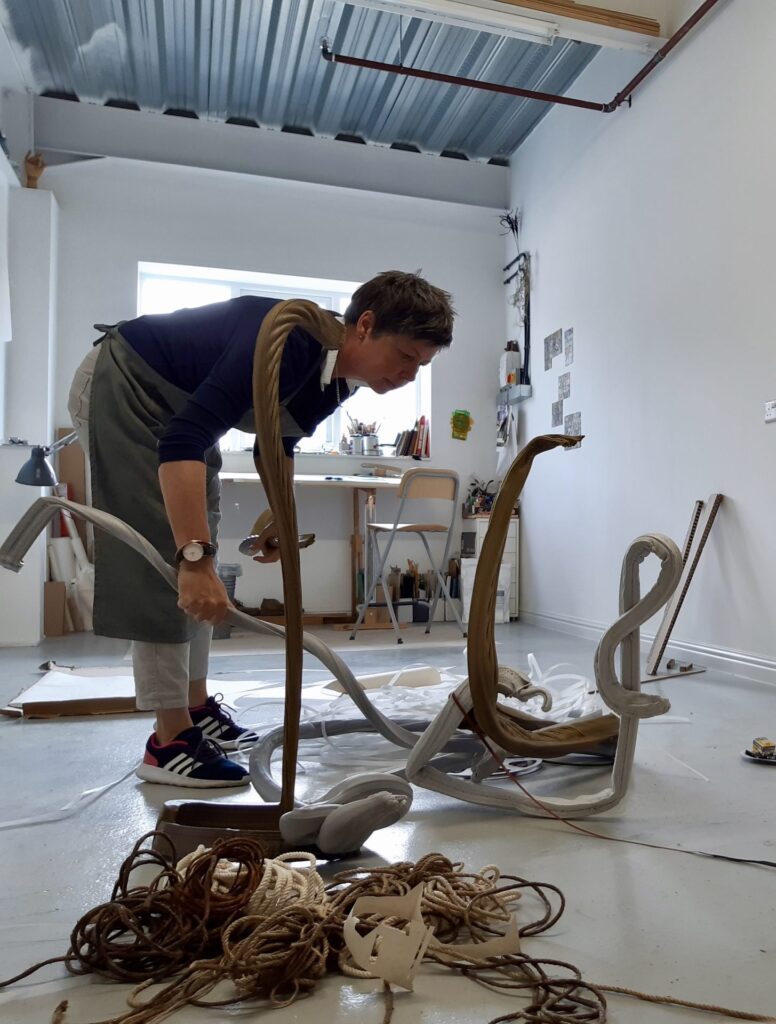
My practice has travelled in many directions, as has my curiosity. I trained as a painter, but always felt the pull of working in three dimensions. As well as my studio practice, I’ve created dozens of exhibitions, performances and creative experiments with people from almost every demographic imaginable. I’ve always had a desire to make work beyond conventional art spaces and audiences, so I’ve found myself working in a huge variety of environments from prisons and streets, to opera houses and shopping centres.
This collaborative way of working is an opportunity to engage with ideas, language and skills in ways that can be both challenging and inspiring. It’s brought me into partnerships with communities, architects, musicians, dancers, filmmakers, writers and scientists. Together, we are able to realise something far more complex or physically ambitious than we could create on our own.
I see my studio as a kind of laboratory, an experimental space where projects can be imagined and developed. When I was starting out, I never imagined I would make whole environments, films, books and vast live performances.
How did you prepare for your time in the New Forest?
I’m from London, a city of nine million people (compared to 176,000 in the New Forest). Trying to visualise the Forest from the complexity of a city seemed like an impossible challenge. I planned the residency more like an athlete – developing a mental preparedness to be open to what the Forest could offer as soon as I arrived. I wanted to be receptive to the natural environment, but also the urban spaces, the people, their knowledge and their skills and experiences.
What aspects of the New Forest have influenced your work the most and how have you adapted to working away from your normal environment?
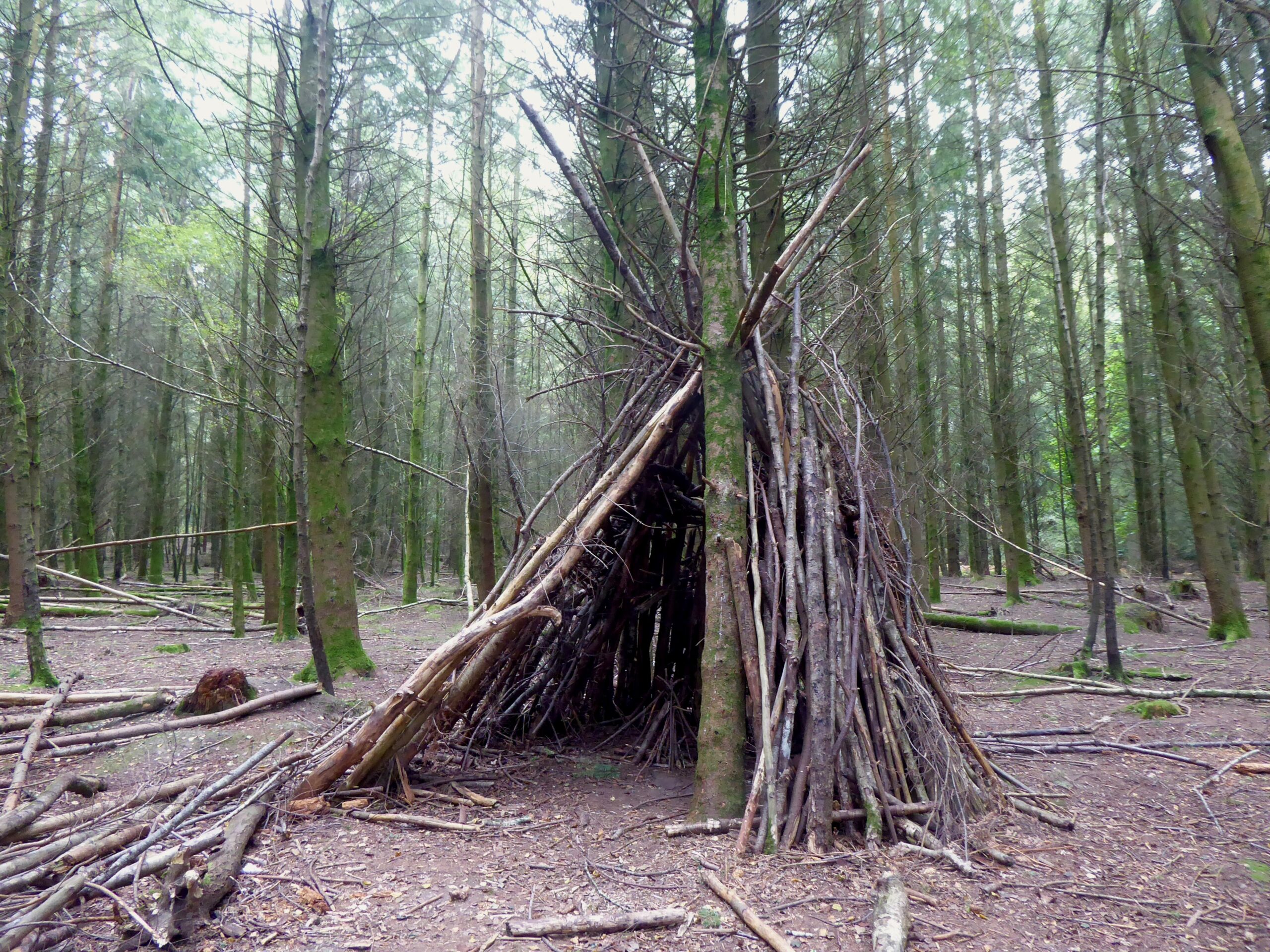
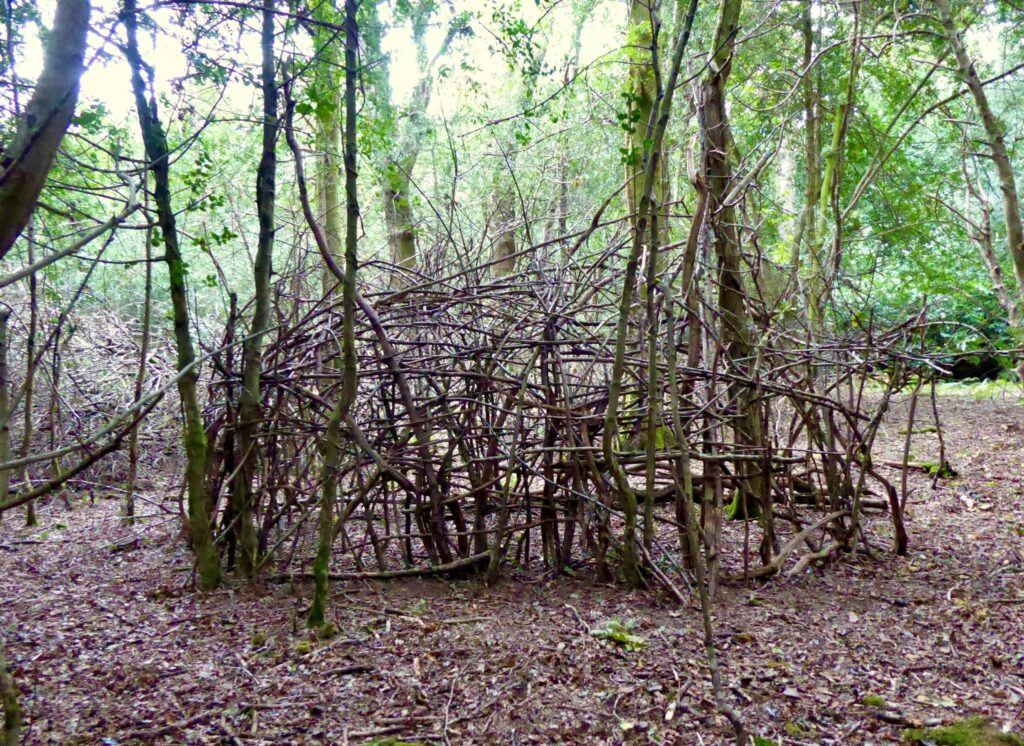
It’s been a challenge to focus on one line of thought because there’s so much here to inspire an artist, but time is short. In my first days, cycling, walking and getting lost in the Forest, I began to notice the dens that have been built just off the paths and sometimes deep into the woods. There seem to be different typologies and I imagine these were determined by the immediate environment and the number of people involved in making them. I started to think of these dens as the most basic form of architecture: both a shelter and a creative act. This inspired me to think of the Forest as my studio and to try my hand at den construction. I’ve found the process completely absorbing (and not always successful), a combination of aesthetic, physical, technical and material experiments and challenges. The materials are plentiful, environmentally sourced and ephemeral. I can leave my mark, but in time my den will disappear and leave no trace.
How will you share these ideas with other people?
I’m strongly committed to making art part of our everyday lives. It was always in my mind to create something where it was least expected and I’m happy to say that the Director of the New Forest Heritage Centre feels the same. So over half-term, I invited passers-by to help me build a den outside their front door. This is much more than a process of construction, it’s an opportunity to exchange ideas, opinions and experiences and to reflect on a basic human impulse – to build a den.
Will your time in the Forest have a lasting influence on your work?
There’s no question that this month in the Forest will stay with me forever. Apart from the many inspiring people I’ve met, the opportunity to find tranquillity, breathable air, and a space for my imagination to roam has been incalculable. I’ve barely scratched the surface of what the New Forest has to offer. My question is, will you have me back?