
Hampshire House Martin Project
Helping house martins find a home in the New Forest
The Hampshire House Martin Project has been awarded a £2,000 grant from the New Forest National Park Authority’s (NPA) Sustainable Communities Fund as part of a major Hampshire-wide effort to boost the number of nesting sites.
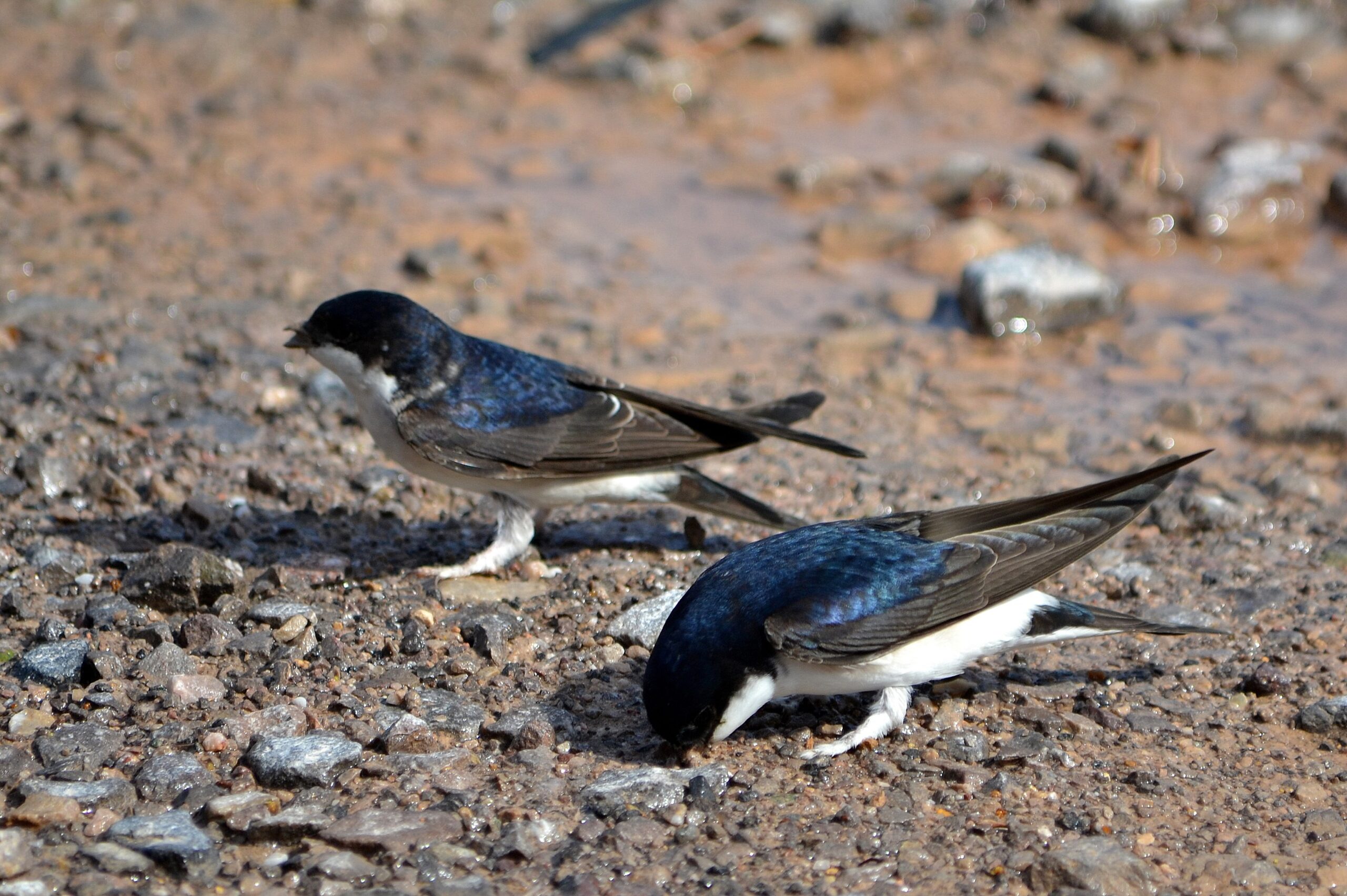
The birds, which are now on Britain’s Red List of endangered species, return from Africa each spring to raise their young beneath roofs and eaves.
Photo Credit: (above) House martins ©Ed Butler
The Hampshire House Martin Project is encouraging residents, schools and local businesses to combine citizen science with practical conservation to find out where house martins are still breeding and help give existing colonies a more secure future.
The scheme is led by Hampshire Ornithological Society and, in addition to the NPA funding, is also supported by Birds on the Brink, House Martin Conservation UK & Ireland, the New Forest Biodiversity Forum, Portsmouth Water, the South Downs National Park Trust’s Sustainable Communities Fund, South East Water, Stannah Lift Group and Thames Water.
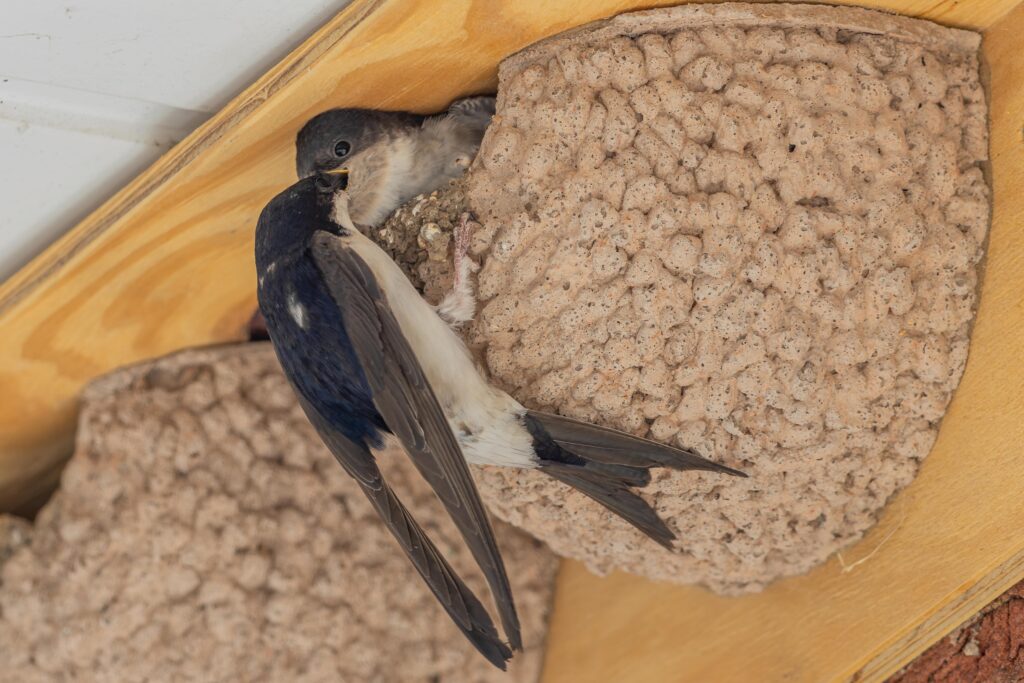
Photo Credit: (Left) House martins using a nest cup ©Steve Laycock.
The Sustainable Communities Fund, operated by the NPA, currently offers grants of up to £2,000, as well as occasional micro-grants of up to £150, to schools, youth groups, community groups and charities based within the New Forest National Park. Since 2006, the fund has awarded over £2.5 million to more than 340 projects supporting wildlife and habitats, reducing carbon emissions, and connecting people with the National Park.
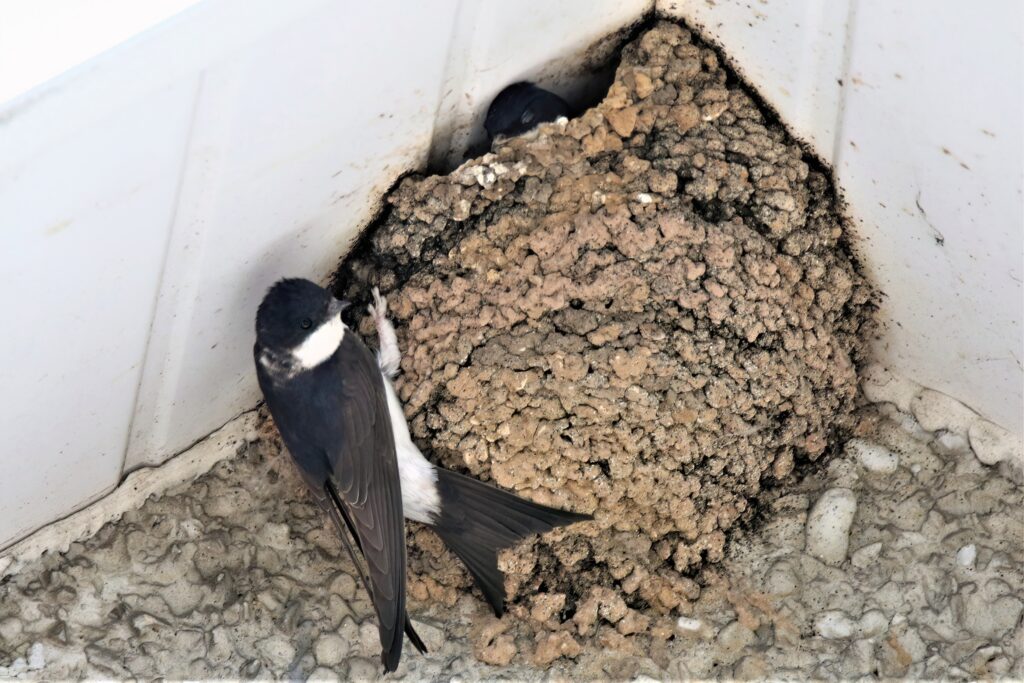
Following a successful pilot last year, Hampshire Ornithological Society plans to install up to 900 artificial nest ‘cups’ across the county before the birds return from Africa in April and May 2027 and is calling on local nature lovers to put their names forward. House martins normally make their distinctive nests from mud, but changing conditions can make suitable nest sites harder to find. The artificial nest cups look like natural nests but are made from woodcrete, which is much stronger and more durable than mud.
Photo Credit: (Right) House martins nesting ©Andy Tew
Alex Harwood, Building Design and Conservation Officer for the New Forest National Park Authority, said: ‘House martins are a great example of how wildlife and the built environment can coexist. By thinking about nesting opportunities when we look after and adapt buildings, there are practical ways we can help these birds continue to make their homes alongside ours.’
Ian Barker, ecologist within the Wildlife and Conservation Team of the New Forest National Park Authority, said: ‘What makes this project particularly valuable is that it connects evidence with action. Residents help identify where house martins are nesting; that information helps target practical support, and monitoring then helps us understand what works.’