
Press release from National Parks UK and VodafoneThree:
- New wildfire response and resilience project in the Cairngorms National Park, supported by VodafoneThree, announced at the Prime Minister’s first Wildfire Summit in Liverpool today.
- The project will map burn severity and habitat resilience, create or manage 15-20 dual-purpose fire ponds, and maintain firebreaks to support firefighting while also providing habitat and biodiversity benefits.
- VodafoneThree and National Parks UK attended the summit, where National Parks set out their shared UK-wide approach to reducing, preparing for and mitigating wildfire.
A new project to help the Cairngorms National Park recover from wildfire and strengthen its resilience to future fires has been announced at the Prime Minister’s Wildfire Summit, hosted by Prime Minister Andy Burnham in Liverpool today (Friday 23 October).
Supported by VodafoneThree, an existing partner of National Parks UK, the project will be delivered with the Cairngorms National Park Authority and National Parks Partnerships (NPP). Representatives of VodafoneThree and National Parks UK were among those attending the summit, which comes after a summer in which wildfires affected national parks across England, Scotland and Wales.
This summer, a major wildfire in the Cairngorms National Park affected thousands of hectares across Strath Nethyand Glenmore, including ancient Caledonian pine forest, heathland and mountain habitats. Technology played a critical part in the response, with thermal imaging drones used to guide firefighting activity and monitor hotspots.
Funded by VodafoneThree, the new project will support recovery in the fire-affected landscape through three strands of work:
- Ecological monitoring and mapping: assessing burn severity and habitat resilience, including identifying areas of resilient habitat where the fire slowed or stopped. Results will feed directly into site management across the affected landscape and the wider 60,000-hectare Cairngorms Connect area.
- A fire resilience and freshwater network: developing guidance on ponds that can be used for firefighting while also providing habitat and wider biodiversity benefits, and creating or managing 15-20 ponds across Abernethy and Glenmore.
- Firebreaks for wildlife: retaining the emergency firebreaks created during the wildfire, which remain vital for future fire resilience, and landscaping and seeding them to create habitat for plants and invertebrates and new pollinator networks.
The partnership will also explore how technology and connectivity could go further in helping National Parks detect and respond to wildfire in the future.
Wildfire is a growing threat to National Parks across England, Scotland and Wales. Fires put homes and infrastructure at risk, alongside woodland, peatland and less mobile species. Spring and Summer remain the period of highest risk, and projected warming and more consecutive dry days are expected to increase the incidence of wildfire.
At the summit, National Parks highlighted the recently published UK National Parks Wildfire Statement, setting out a shared approach to reducing the risk of wildfire, preparing for fires that do start and mitigating their impacts on the landscape. Through the statement, National Park Authorities have committed to including wildfire management in their National Park Plans, identifying a wildfire lead and sharing best practice through the UK National Parks Wildfire Group.
While frontline response is led by land managers and fire and rescue services, National Park Authorities play a strategic and preventative role, bringing partners together to build more resilient landscapes through measures such as re-wetting, peatland restoration, strategic firebreaks and pond creation.
Grant Moir, Chief Executive, Cairngorms National Park Authority, said:
‘This summer a devastating fire broke out in the Cairngorms National Park, impacting thousands of hectares of treasured landscapes, including ancient Caledonian pine forest, heathland and mountain habitats. Technology played a critical part in the response, including the use of thermal imaging drones to guide firefighting activity and monitor hotspots.
‘We welcome the support from VodafoneThree and look forward to working with them and National Parks across the UK to explore how technology can go further in helping us tackle the threat of wildfires.’
Nicki Lyons, Chief Corporate Affairs and Sustainability Officer, said:
‘Connectivity is critical to national resilience, helping communities access trusted information, emergency services coordinate and areas recover from disruption. At VodafoneThree, we combine resilient connectivity with network as a sensor technology, data, partnerships, and practical action to strengthen preparedness.
‘Through our work with the National Emergencies Trust and National Parks UK, including a new wildfire resilience programme in the Cairngorms National Park, we are supporting local recovery and resilience to future fires. Bringing together connectivity, local expertise and long-term investment can help communities prepare, stay connected during emergencies and recover faster.’
Announced alongside the Prime Minister’s new commitments on wildfire, the Cairngorms project forms part of wider efforts across the UK’s National Parks to build landscapes that are more resilient to climate change, and shows how partnerships with business can help turn shared commitments into practical action on the ground.
View the Government press release about the Wildfire Summit.
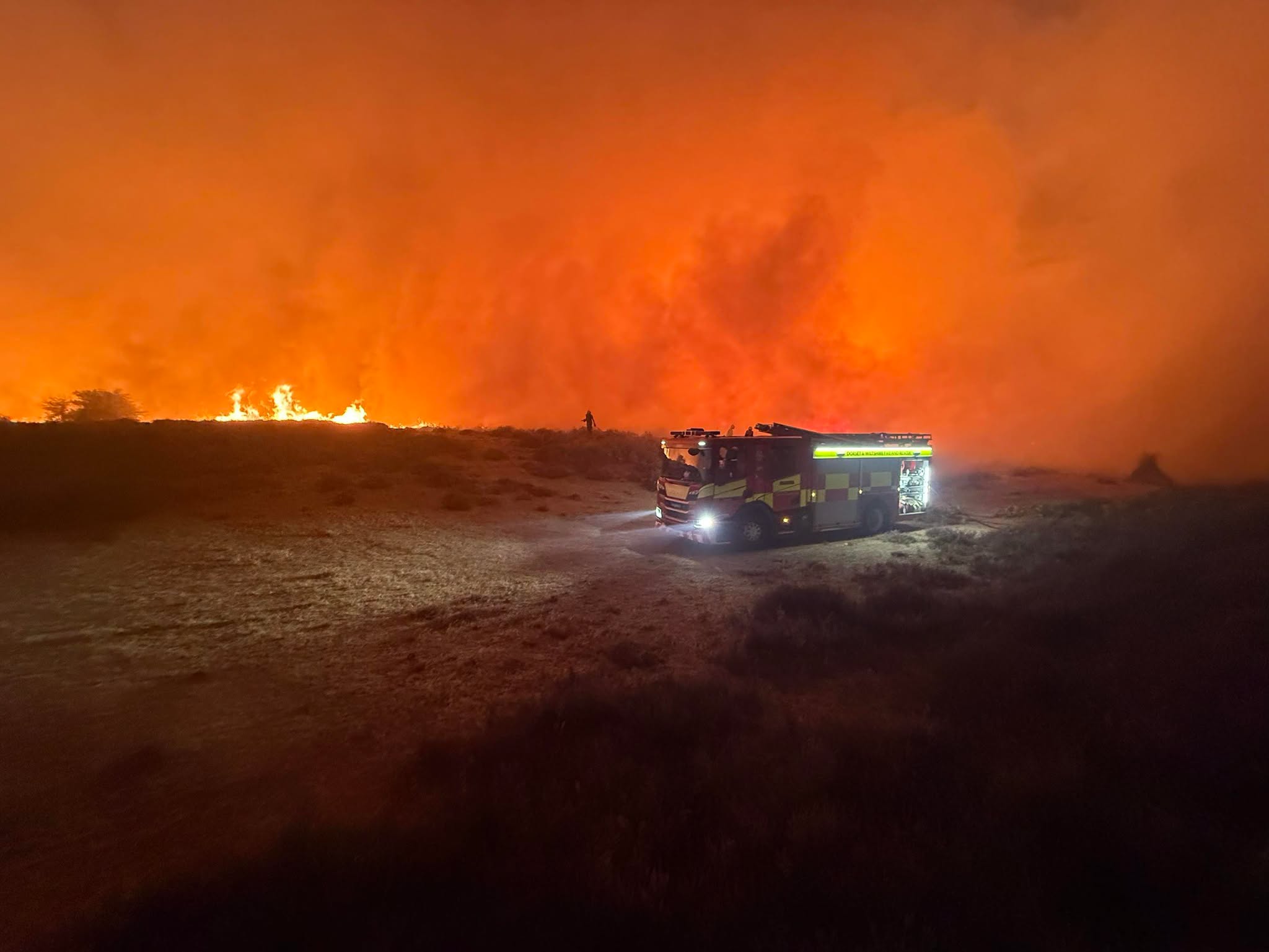
Photo caption: Verwood Fire Station tackles the New Forest A31 wildfire August 2026 Credit DWFRS