Dean Kelland
Residency date: May 2026
Project Title: Finding Julian
Website: https://www.deankelland.com/
Instagram: @deankellandofficial
About the artist:
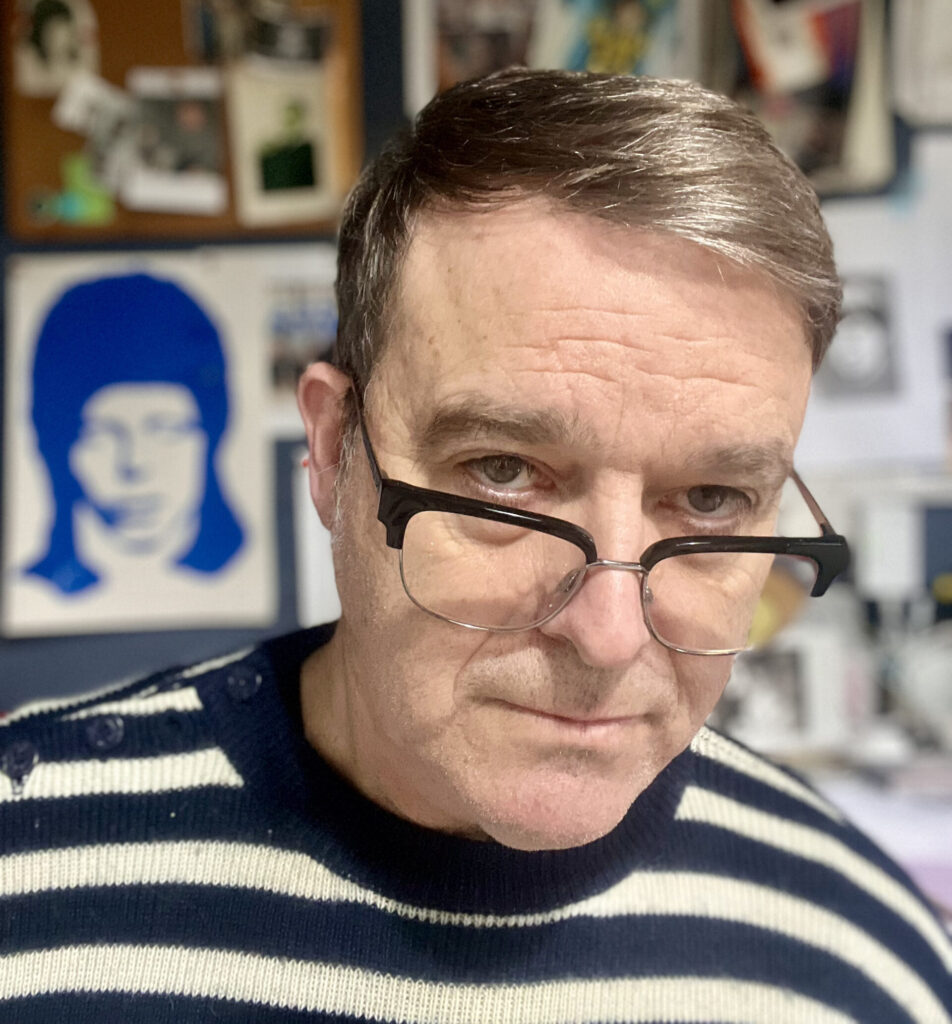
Dean Kelland is a UK-based interdisciplinary artist whose practice spans performance, photography, print, and filmmaking. His work interrogates the intersections of taste, class, and social history, offering nuanced observations on the construction of collective and mediated identities. Kelland holds a PhD, his doctoral thesis at Central Saint Martins, Flawed Masculinities, established a methodological framework for “rupturing” the cultural narratives of 1950s–70s British television through performance.
Collaboration and performance
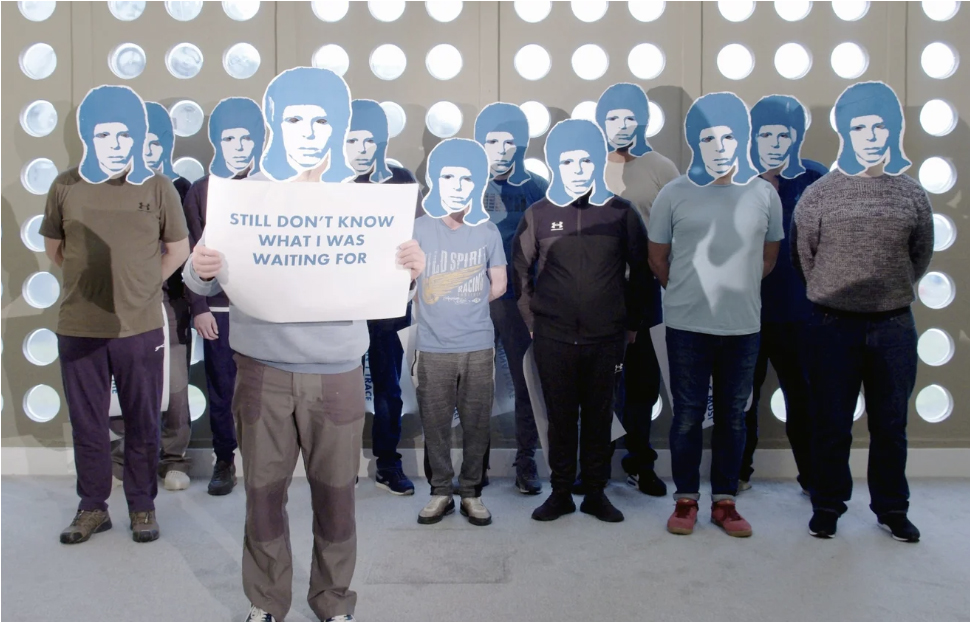
With an exhibition record that spans national and international venues, Kelland has held notable residencies at The New Art Gallery Walsall and the Birmingham & Midland Institute. From 2019 to 2023, he completed a landmark four-year residency at HMP Grendon, supported by Ikon Gallery and the Marie-Louise von Motesiczky Charitable Trust. During this tenure, he established the first contemporary art gallery within an operational UK prison—an initiative that included a dedicated workshop space and collaborative projects with wing communities in print and collage.
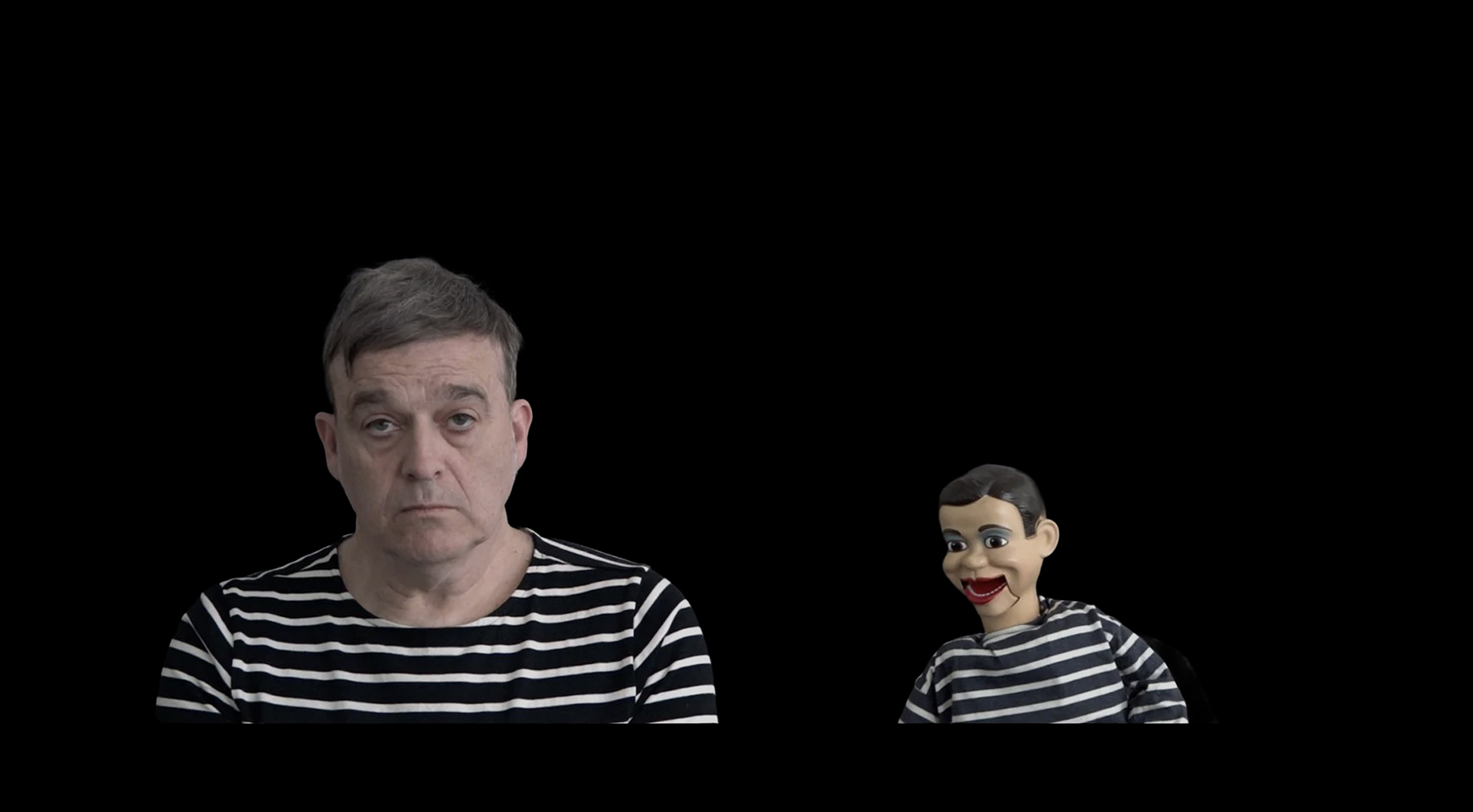
His recent collaborative work, Now & Then, continues his exploration of psychological archetypes, specifically investigating childhood memory through the practice of ventriloquism.
Finding Julian
Following Dean’s May 2026 Residency, his exhibition ‘Finding Julian’ will showcase at Spudworks in the New Forest village of Sway, throughout October 2026.
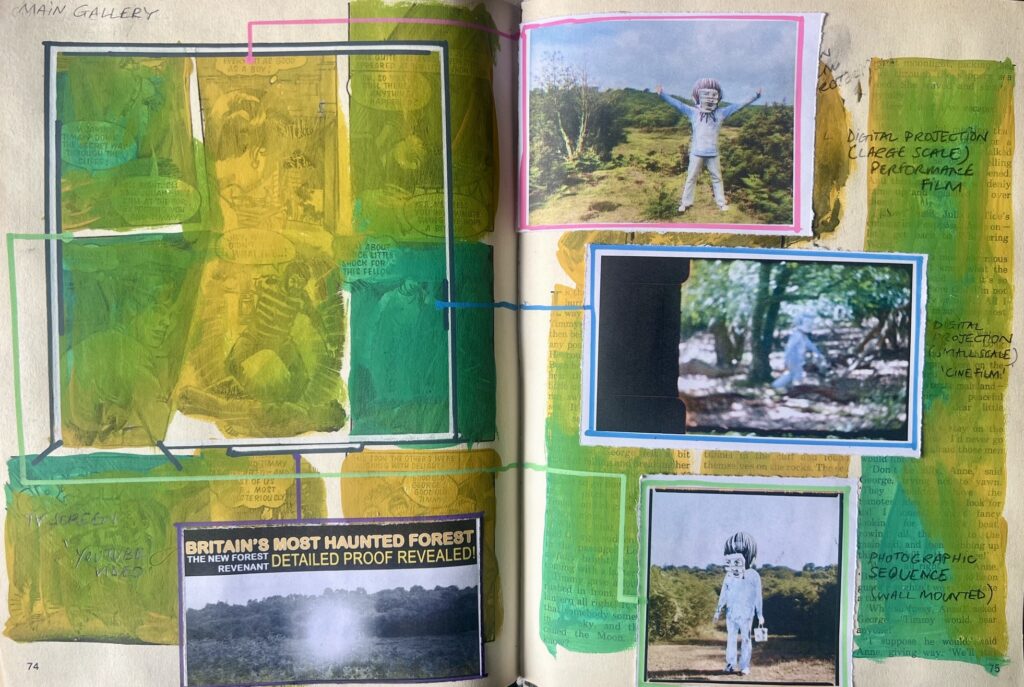
Finding Julian explores mediated identities, imagined landscapes and the persistence of the past within the present. Taking the 1978 television adaptation of Enid Blyton’s The Famous Five as its point of departure, the work stages a search for the central character Julian across significant sites in the New Forest through performative film, documentary footage and analogue photography.
Conceived as an infra-medium – operating between established categories rather than as a fixed process – performance enables the work to move between past and present, myth and reality, lost futures and recurring cycles of nostalgia.
Interview with Dean Kelland - New Forest National Park Artist in Residence
Can you give us a brief overview of your creative background and what has led you to the work you produce today?
I often think of myself as an accidental performance artist — also an artist filmmaker, a sketchbook obsessive, working across photography, collage and printmaking. “Interdisciplinary” probably covers it, though I’m less interested in fixed labels than in potential. My focus is always on not what I can do, but what I could do. Each residency, for instance, is its own situation. I try to enter those spaces by listening first—letting the context guide me before I decide how to think or make.
Early on in my career, my work was rooted in the English rural landscape. It was mostly photographic, driven by a curiosity about this romanticised idea of England.
Growing up as a landlocked, working-class kid in Birmingham, that version of England felt distant—almost fictional. I think I was trying to understand something I hadn’t really experienced.
I had a conversation in the early 2000s with the artist and curator Ian Brown. It was supposed to be brief—just a cup of tea—but I ended up unloading years of thoughts about British sitcoms, something I’d been obsessed with since childhood but had never considered as material. Ian listened and then asked a simple question: why wasn’t I making work about that? That question changed everything. It made me realise I’d been working within a framework that didn’t really belong to me. He encouraged me to think through my own experiences and obsessions instead. I went back to my studio, loaded all my existing work into the car, drove to the local tip, and threw it all away. It was a complete reset.
Since then, my work has centred on moments and figures from British cultural history—things embedded in the collective consciousness. They might be mainstream references, or they might be more obscure, but that distinction doesn’t matter to me. What interests me is how identity is constructed through these shared cultural points—how characters, narratives, and historical fragments become anchors. Especially now, when ideas of collective and individual identity feel increasingly fragmented and contested, I’m drawn to how these references shape our sense of self and personhood.
My work is as much about cultural memory as it is about personal experience? It’s about the overlap—where personal obsession meets shared history, and how that intersection can reveal something about who we are, both individually and collectively.
Initially, what aspects of the New Forest do you envision influencing your work the most?
Initially, my thinking is shaped by the 1970s television adaptation of Enid Blyton’s Famous Five, which was filmed in the New Forest. The series returns to a number of recurring locations that became integral to its fictional world, and revisiting these sites feels like a natural starting point for the residency.
From there, my interest extends beyond Blyton’s original — and subsequently reworked — narratives into the wider landscape itself, particularly as a signifier of “home.” I’m drawn to how place holds and accumulates meaning over time: the layering of memories, the act of returning, and the traces of histories — both personal and cultural — that persist within it. These ideas feel like key points of departure as I begin to explore and respond to the New Forest.
How do you hope to engage the local community with your work?
I am dedicated to a collaborative methodology where community voices are integral to the work. This approach, which proved transformative during my time at HMP Grendon, ensures a richer, more nuanced creative dialogue. My strategy for engagement involves a process of co-creation, where I will conduct regular workshops with community groups to develop collaborative pieces for the exhibition and contextual dialogue where the screening of the Famous Five television episodes will hopefully prompt community reflection on the New Forest’s cultural and media heritage.
Are you planning to use any new mediums during your residency?
Possibly…I’ll find out. As I said earlier, residencies are transformative platforms for artistic discovery and dialogue. By engaging with unfamiliar places and situations, an artist is compelled to expand their practice, fostering the adoption of new techniques and innovative working methodologies.
How do you like to connect with nature and the great outdoors?
At heart I’m a city boy and transitioning from an urban-centric practice to this new environment intentionally disrupts my established routine. This move away from the familiar is a deliberate choice, based on the conviction that meaningful artistic production is most effective when you are challenged by new and uncertain perspectives.
How do you begin a day in the studio?
My daily practice begins with a cup of tea and a reflective engagement with my sketchbook, where I interrogate developing concepts and emerging themes. These ideas are then translated onto a ‘dialogue wall,’ which serves as a central pillar of my process—a visual map of my ongoing conversation with the work. This iterative cycle of reflection and visualization dictates my daily studio objectives, whether they involve practical activity, deep-dive research, or site-specific exploration.
What tools and materials will you be sure to pack for your residency?
My creative process begins with the production of bespoke sketchbooks, made either from scratch or by repurposing found annuals that I pick up in charity shops. Consequently, bookbinding tools are essential to my residency kit. I also incorporate everyday materials like masking tape and household paint (tester pots) to maintain a specific visual and tactile aesthetic across my work, so plenty of different colour and size tapes as well as a range of tester pots have to be to hand.