Tree graffiti
Tell Us Your Sightings
The New Forest has the densest population of ancient and veteran trees in Europe, so it’s little wonder some of them bear marks from many years ago.
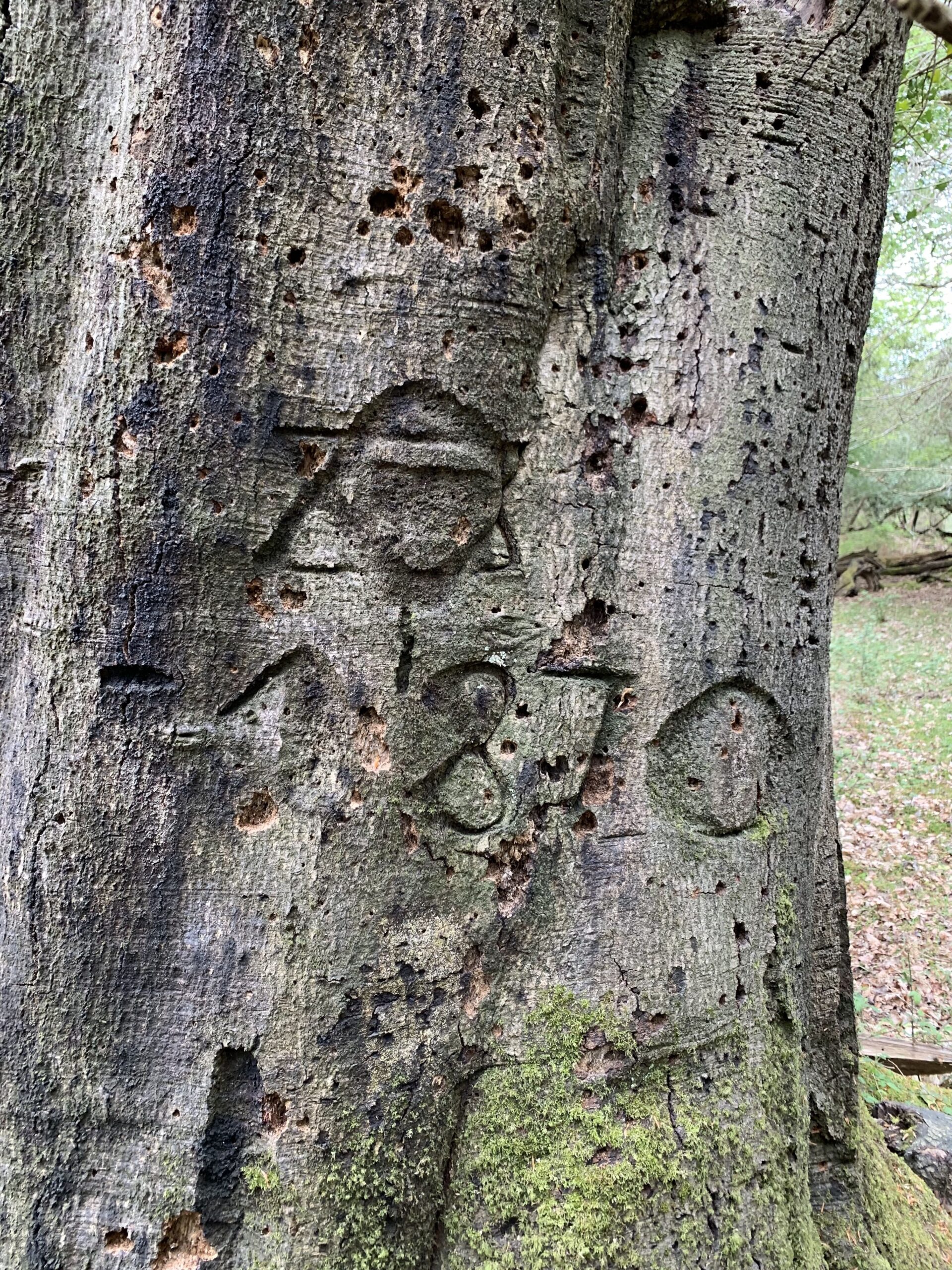
While graffiti is seen as a modern blight on urban areas, in the depths of the Forest these ancient scribblings are a window into the past, revealing how some of our ancestors used the area.
Much like archaeological remains, tree graffiti (also known as an arborglyph) is under threat. Over time, the marks are warping or are being damaged by animals or humans. Trees blowing over or dying also threaten the longevity of these historic records.
We’re calling for sightings of this ‘tree graffiti’ – some of which dates back hundreds of years. You can let us know via the form below.
To date, there’s no central record of the known tree graffiti found across the New Forest. We want to be able to refer back to these glimpses into the New Forest’s past, even when the trees themselves are lost.
Your findings will help to map and record the lost and forgotten stories of the New Forest woodlands in a new database which the public can access. It will allow everyone from researchers and landowners to schools and community groups to see how people have interacted with trees here over the centuries.
FORM EMBED
Tree graffiti citizen science results
Take a look at this map below to explore the fantastic historic tree graffiti submissions sent in by our citizen scientists.